
Vimeo Twitter Linkedin RSS
greenwashing

Final adoption of the directive against greenwashing and misleading information

01/07/2024

On 20 February the Council of the European Union finally gave the green light to a new Directive whose main objective is to protect consumers from all misleading commercial practices carried out by companies. This new Directive will be called Directive (EU) 2024/825 of the European Parliament and of the Council of 28 February 2024 on empowering consumers in the green transition through better protection against unfair practices and through better information ("Green Claims Directive"). 

The new Directive aims primarily to combat greenwashing, which occurs when companies make false or exaggerated claims about the environmental impact of their products in order to attract consumers who are concerned about the state of the environment.


This misleading practice can lead to poor purchasing decisions and damage consumer confidence in companies that are committed to sustainability and care for the environment.
In 2020, the European Commission presented worrying data on greenwashing practices: 53.3% of environmental claims reviewed in the European Union were found to be misleading or unfounded, and approximately 40% lacked supporting verification.


To try to put an end to this practice, this new regulation provides for a ban on the use of environmental terms such as "environmentally friendly", "biodegradable" or "eco" in labelling, as well as the use of sustainability labels, among others, without any kind of control or comparable reference.


Another of the points to be regulated by this legislation is to ensure that producers and consumers focus on the durability of goods. To this end, a new harmonised label will be created to give more visibility to products that have an extended guarantee period, and the guarantee will be made more visible.


In addition, this regulation will prohibit unfounded claims about the presentation of products as repairable, the durability of products and the encouragement to replace consumables earlier than strictly necessary.
To ensure that companies comply with their obligations, control mechanisms are implemented, such as third-party verification of environmental targets and commitments and the obligation to make the results of verifications available to consumers, thus ensuring transparency.


In addition, it is foreseen that the competent authorities will carry out audits to verify compliance with the provisions of the Directive and the member states will be able to impose effective, proportionate and dissuasive sanctions. Thus, companies that fail to comply with the new rules could be temporarily excluded from public procurement tenders and face fines of up to 4% of their annual turnover.


This Directive marks an important milestone in the regulation of environmental advertising in Europe, impacting both businesses and consumers, and is part of the EU's wider efforts to move towards a more sustainable economy and protect consumers from unfair commercial practices. It seeks to build consumer confidence in environmental claims and promote a more transparent and accountable market in terms of sustainability.


In addition, public administrations are committed to encouraging the adoption of sustainable and transparent practices in the marketplace, as well as facilitating business access to sustainability labels.


Member States will have to transpose the Directive into national law by 27 March 2026, and will have to apply this transposition from 27 September 2026. In Spain, the Ministry of Consumer Affairs has already started to process a Sustainable Consumption Law.


Access to the full economic note

Published in

ESG: Corporate Sustainability
El TJUE (sentencia 30-5-2024) anula el tramo autonómico del Impuesto Especial de Hidrocarburos

The CJEU (ruling 30-5-2024) cancels the regional Special Tax bracket on Hydrocarbons

14/06/2024

Recently, the CJEU, in its ruling of 30-5-2024 (case C-732/22), declared that the autonomous community bracket of the Special Tax on Hydrocarbons (IEH) does not comply with European Union law. The CJEU stated, in response to a preliminary ruling by the Supreme Court, that this regional tax bracket is contrary to European law as it allows different tax rates to be applied to the same product and use.

There are currently several cases before the Supreme Court concerning applications for the refund of undue income arising from the payment of the aforementioned regional section of the IEH. Two controversies are raised in these appeals:

  1. On the one hand, to determine whether or not the autonomous community section of the IEH is in accordance with EU law. The Supreme Court considered it appropriate to refer a question to the CJEU for a preliminary ruling, which is the one resolved in this judgment. 
  2. On the other hand, in the event that the tax is not due (as mentioned above), it is necessary to determine who is entitled to claim a refund of the tax unduly paid. 

Once it has been decided that the autonomous tax bracket of the IEH is not in accordance with the law, the Supreme Court will have to rule on who is entitled to claim a refund of the tax. This question is not clear. The reason for this is that the operation of the IEH is different from that of the "céntimo sanitario" (or Tax on the Retail Sale of Certain Hydrocarbons -IVMDH-) which was annulled by the CJEU in its ruling of 27-2-2014. The "céntimo sanitario" was paid by those who purchased hydrocarbons (petrol, diesel...) at service stations. Therefore, its annulment gave rise to the right of those who refuelled at service stations to obtain a refund of the amount unduly paid. 

On the other hand, the autonomous region's IEH is a tax that is paid at the time of manufacture or import of the hydrocarbon; it is not paid at the time of sale at the service station.

In the case of the autonomous community section of the IEH, there is no doubt that those taxable persons (manufacturers or importers of hydrocarbons) who paid the tax through their corresponding self-assessments are entitled to request a refund.

But what is also at issue is whether or not the persons or entities, who financially bore the improper tax when it was passed on to them (e.g. owners of service stations or users of service stations), are also entitled to claim a refund of what was unduly paid.

Depending on the Supreme Court's ruling on who can apply for a tax refund (whether only manufacturers and importers, or also sellers - service stations - or final purchasers), it will have to be analysed which will be the appropriate way to try to recover the tax unduly paid.


Access to the full informative note


Published in

Tax
Related professionals
RocaJunyent acelera su crecimiento con la integración de DJV Abogados

RocaJunyent accelerates its growth with the integration of DJV Abogados

18/06/2024

RocaJunyent's Madrid office has almost doubled its capacity with the incorporation of four partners and 30 professionals from DJV Abogados. 

The transaction consolidates the firm's position in Madrid and deepens its specialisation in the areas of corporate, finance, litigation, banking and real estate.

Barcelona, 17 June 2024. RocaJunyent has closed the integration of the Madrid law firm DJV Abogados. Specialising in commercial and financial law, as well as banking and real estate litigation, it represents a clear boost to RocaJunyent's strategy of consolidating its position in Madrid. 

Pedro Navarrete González-Bueno, current managing partner of DJV Abogados, Javier Fernández Alonso, Antonio Puerta Morales and José M. Alcolea Díez join RocaJunyent as quota partners. In addition, 30 professionals from the Madrid firm have joined the firm. 

The integration of DJV Abogados is in line with the objectives of RocaJunyent's Strategic Plan 2023- 2025, and allows it to raise the weight of the Madrid office's business to 30% of the firm's total, which aims to exceed 40 million euros this year.

With this operation, RocaJunyent strengthens several key areas for the firm in Madrid, such as commercial, financial, procedural, banking and real estate, incorporating the background and experience of a solvent and highly recognised professional team. After the integration, RocaJunyent has a team of 49 partners and more than 170 professionals distributed in the Madrid and Barcelona offices. 

The DJV Abogados team will arrive at the RocaJunyent offices in the last quarter of 2024. For its incorporation, the firm chaired by Joan Roca is expanding its current headquarters in Madrid, located at Calle José Abascal 56, with an additional 750 m2 on the sixth floor of the building, which will be added to the 2,200 m2 already occupied by the firm. 

Joan Roca, Executive Chairman of RocaJunyent, welcomes the DJV professionals joining the RocaJunyent project and points out that "the integration is an important boost for our firm in Madrid, where the firm has plans for growth, in line with the objectives of the Firm's Strategic Plan". Joan Roca adds that "the integration of DJV Abogados is a new milestone for the firm, following the creation of the RocaJunyent Group at the end of 2023, to expand the presence of our firm in Spain, with more than 250 professionals". 

For his part, Pedro Navarrete, managing partner of DJV Abogados, welcomes the agreement between the two firms and points out "the excellent fit and complementarity of services of both firms, which will result in a better and more comprehensive service to the client".


Link to the article at Diario Expansión (available in Spanish)


Comunidad de Madrid Proyectos normativos Incentivos fiscales para el traslado de la residencia fiscal a la Comunidad de Madrid

New tax incentives for the transfer of tax residence to the Territory of the Madrid Region

06/06/2024

The Government of the Madrid Region has prepared two Drafts of Laws seeking to approve two additional tax incentives to those already applicable to tax residents in the Autonomous Region of Madrid.

These incentives relate to:

  • A Tax Relief amounting to 20% of the value invested in debt and shares in companies’ resident in any part of the World (only excluding certain Tax Haven).
  • High tax benefits for young people (under 35 years) willing to move to the Community of Madrid.

Individuals not resident in Spain who become tax resident in the Madrid Region as of 2024, could apply a regional deduction of 20% of the acquisition value of the following financial assets in companies, regardless of the territory or country in which those companies are domiciled (with few limitations only in case of companies from tax havens territories) and without it being necessary for them to be traded or quoted on an organised market.

It should be noted that, as this is a deduction applicable exclusively to those paying Personal Income Tax, hence it might not be compatible with the Spanish Inpatriate Tax Scheme known colloquially as the “Beckham Law”.

Remember:

  • In order to acquire the tax residency in the Madrid Region in 2024, the tax residency change should be executed before July the 1st.
  • Investments eligible for deduction must be made in the year of change of residence and may be in companies resident in any country, tax havens are excluded only in few cases.

Access to the full informative note

sostenibilidad corporativa

Charting the Future: Europe's New Sustainability Due Diligence Directive

30/04/2024

Following our alert last December on the proposed Corporate Sustainability Due Diligence Directive (CSDDD), on 24 April the European Parliament gave the green light to new legislation that will oblige companies to mitigate their negative impact on human rights and the environment.

The finally approved CSDDD does not differ from the content we published in our previous alert (click on the link in the previous paragraph to read it), except in:

  • Subjective scope of application:

1,000 employees

An annual net turnover of more than €450M in the last financial year.

  • The special regime in risk sectors is eliminated.
  • Direct references to the management body and corporate social responsibility have been removed.
  • A minimum limitation period of 5 years has been included.

The new rules - with the exception of reporting obligations - will apply gradually to EU companies and to non-EU companies that reach the turnover thresholds indicated in the EU:

  • from 2027 for companies with more than 5,000 employees and a worldwide turnover of more than EUR 1.5 billion;
  • from 2028 for companies with more than 3,000 employees and an aggregate turnover of EUR 900 million or more;
  • from 2029 for all other companies including those with more than 1,000 employees and a worldwide turnover of more than EUR 450 million.

Following approval by the European Parliament, the timetable foresees that on 23 May EU ministers will give the final green light to the CSDDD following the Council's approval. Once published in the Official Journal of the European Union, Member States will have to implement due diligence within two years.


Access to the full informative note

File
CSDDD (188.67 KB)

Published in

ESG: Corporate Sustainability
José María Gimeno Feliu

RocaJunyent brings in José María Gimeno Feliú to reinforce its public law services

07/05/2024

Professor of Administrative Law at the University of Zaragoza, Gimeno Feliú is one of the country's leading experts in public law.

José María Gimeno Feliú, who joins the firm as ‘of counsel’, is the author of 30 monographs and more than 200 publications in collective books and journals.

Madrid, 30 April 2024. RocaJunyent has appointed José María Gimeno Feliú as of counsel in the Public Law Department. Gimeno Feliú, one of the country's leading experts in public procurement, will bring his extensive experience in this area to the firm's clients, adding his expert and highly specialised knowledge to the services of RocaJunyent's Public Law department, which is made up of five partners and 17 lawyers.

José María Gimeno Feliú has been Professor of Administrative Law at the Faculty of Law of the University of Zaragoza since 2010, where he was Dean between 2003 and 2010. The academic is director of the Chair of Projects and Strategic Investments in Aragon, since January 2024, and co-director of the Chair of Local Public Procurement of the Zaragoza City Council since 2020. In addition, between 2010 and 2012, he was director of the Chair of Local Law of Aragon and of the Chair of Innovation in Health Procurement (from 2016 to 2020).  From March 2011 to January 2018, he was President of the Public Procurement Tribunal of Aragón.

Among his current positions, José María Gimeno Feliú has been a member of the Advisory Council of the Ministry of Public Works since 2015, and has co-directed since 2011 the Public Procurement Observatory, which has actively participated, among others, in the public consultation promoted by the European Commission on the occasion of the publication of the Green Paper on the modernisation of EU public procurement policy, as well as in the public consultation promoted by the Spanish Government on the occasion of the publication of the Draft Bill on Transparency, Access to Information and Good Governance.

Joan Roca Sagarra, executive chairman of RocaJunyent, is grateful for José María Gimeno Feliú's decision to join the firm, noting that ‘his arrival is the best news, both for the firm and for our clients’. ‘His excellence and extensive knowledge in the field complete and ensure the best of services in our Public Law department’.

RocaJunyent's new of counsel is the author of more than 30 monographs and more than 200 publications in collective books and specialised journals on public procurement, including El control de la contratación pública. Las normas comunitarias y su adaptación en España, Contratos públicos: ámbito de aplicación y procedimientos de adjudicación, Contratación de las Administraciones Públicas: análisis práctico de la nueva normativa sobre contratación pública or La nueva contratación pública europea y su incidencia en la legislación española, among others.

José María Gimeno Feliú is also a regular speaker at specialised national and international forums. He is also a member of the Academic Steering Committee of the Ibero-American Public Procurement Network and a member of the Scientific Committee of the Osservatorio di diritto comunitario e nazionale sugli appalti pubblici, in Italy.


File
Related professionals
legal 500

The Legal 500: Tax Comparative Guide - Spain Tax

Raúl Salas, Tax Law partner, and Elena Ferrer-Sama, Area Director of Tax Law, have collaborated in "The Legal 500: Tax Comparative Guide - Spain Tax" guide from Legal 500. This country-specific Q&A provides an overview of tax laws and regulations applicable in Spain.

You can consult the chapter in the following link


Published in

Tax
Related professionals
fc girona sostenibiltat

Agreement with RocaJunyent to advise on the Girona FC's sustainability strategy

29/04/2024

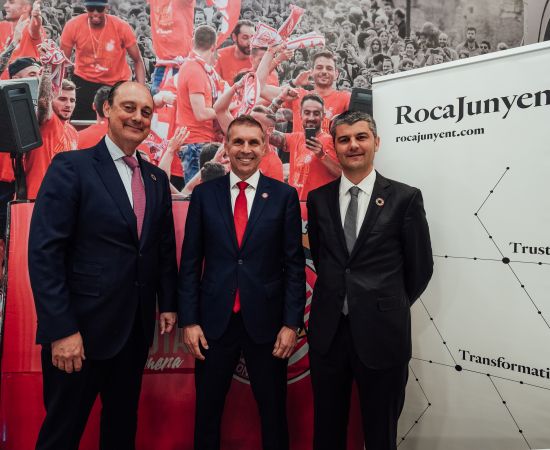
Girona FC and RocaJunyent have signed a collaboration agreement that aims to reinforce Girona FC's commitment to and support for sustainability.

In this way, during the next financial year and given the Club's sensitivity in this area, it plans not only to comply with current regulations and the recommendations of the League and UEFA, but also to tackle the implementation at a strategic level of the measures necessary to move towards management that is more aligned with sustainable development.

In view of the new challenges that arise, and due to the growth that the Club is experiencing, this consultancy will enable it to successfully meet the recent and growing regulations, as well as to continue to make Girona FC a benchmark club in all areas.

Among the main actions, it is planned to adapt the club's internal structure to guarantee a robust corporate governance structure, to organise and find the best way to report on the actions already initiated or to be carried out in the area of sustainability and to reinforce the Club's commitment through the United Nations Global Compact initiative.

Established in 1996 and with more than 250 professionals, RocaJunyent is one of the leading law firms in the country. Through the RocaJunyent Group, the firm is present in the main Spanish cities. RocaJunyent has recently been included in the Legal 500 Green Guide as one of the best European law firms in the field of sustainability, an aspect that strengthens the firm's commitment to this matter.

RocaJunyent's Girona office, which will soon celebrate its 25th anniversary and continues to grow in the region, will represent the firm in the Girona FC Business Club, also participating in this forum with various initiatives to raise awareness of the Club's sensitivity to sustainability issues, among other matters.

Published in

ESG: Corporate Sustainability
Related professionals
Reglamento Europeo de Inteligencia Artificial

European Regulation on Artificial Intelligence

15/03/2024

On 13 March 2024, the European Parliament has adopted the Regulation on Artificial Intelligence ("Regulation" or "RIA") laying down harmonising rules on Artificial Intelligence ("AI") and obligations on operators of AI systems through a risk-based approach to the fundamental rights of data subjects and the values of the European Union. 

The scope of the Regulation extends beyond organisations established in the European Union ("EU") to those using Artificial Intelligence in the European market. This means that many multinationals, with a presence or commercial interactions in the EU, will also have to apply it.

The Regulation will be published in the Official Journal of the European Union and will enter into force 20 days later, being fully applicable after two years. This deadline is subject to certain exceptions determined by the categorisation of the risk associated with AI systems, as detailed in the attached information note.

What is IA?

According to the Regulation, an AI system is considered to be an AI system when it is machine-based, designed to operate with different levels of autonomy, demonstrates adaptive capabilities and can infer from the input it receives, for explicit or implicit purposes, how to generate outputs such as content, predictions, recommendations or decisions that can be inferred in physical or virtual environments.


Access to the full informative note

Published in

Data Protection, Cybersecurity and Technology
Related professionals
Economía y política

Economic Note: Draghi to the rescue... again

22/04/2024

By David Vegara, Chairman of the Advisory Board of RocaJunyent

David Vegara, Chairman of the Advisory Board of RocaJunyent, invites us to read his Economic Note. In it, he analyses the economic situation from various perspectives, starting with the Italian context of political instability contrasted with economic growth apparently independent of politics. However, this "Italianisation" has negative long-term consequences, such as the lack of long-term plans and the loss of ground in terms of per capita income. Despite this, the Italian economy shows positive signs, with growth of 2.5% in 2023 and encouraging projections for 2024.

It also examines the situation in Germany, whose projected growth is modest due to the loss of economic pillars such as affordable energy and demand from China. It questions whether Germany is once again becoming "the sick man of Europe", highlighting the need for reforms to boost growth and productivity across Europe.

Mario Draghi is highlighted as a key player in Europe's economic rescue, presenting a report on how to improve European competitiveness. David Vegara discusses current challenges, such as the lack of growth compared to the US and the need to increase investment and innovation.

Finally, he anticipates a future in which public spending will play a crucial role in economic redistribution and stabilisation, which could lead to greater public intervention and, eventually, to a reunion between politics and economics.


Access the full Economic Note.

File
Subscribe to